
Premium Coconut Shisha Charcoal Sentul, Bogor
Coconut Shell Charcoal Briquettes Factory & Exporter (Shisha & Hookah Coals), Indonesia
By Agus Setiawan, Production Supervisor · Last updated
PT Premium Coconut Shisha Charcoal Indonesia makes its coconut shell charcoal briquettes at its own factory in Kawasan Industri Sentul, Bogor. Wholesale only, factory-direct, minimum one full container, shipped declared as UN 1361, Class 4.2 dangerous goods. Every number below is published so you can check it. The ones we do not have are absent rather than estimated.
- Minimum order
- 1 × FCL (20 ft or 40 ft)
- Route to market
- Factory-direct export
- Production lead time
- 15 working days (20 ft) · 20 working days (40 ft)
- Port of loading
- Jakarta (Tanjung Priok) primary; Semarang also used
- Incoterms
- EXW Factory, FOB Tanjung Priok and CFR
- Price range
- USD 1,570–1,900 per tonne, FOB Tanjung Priok
What we make & for whom
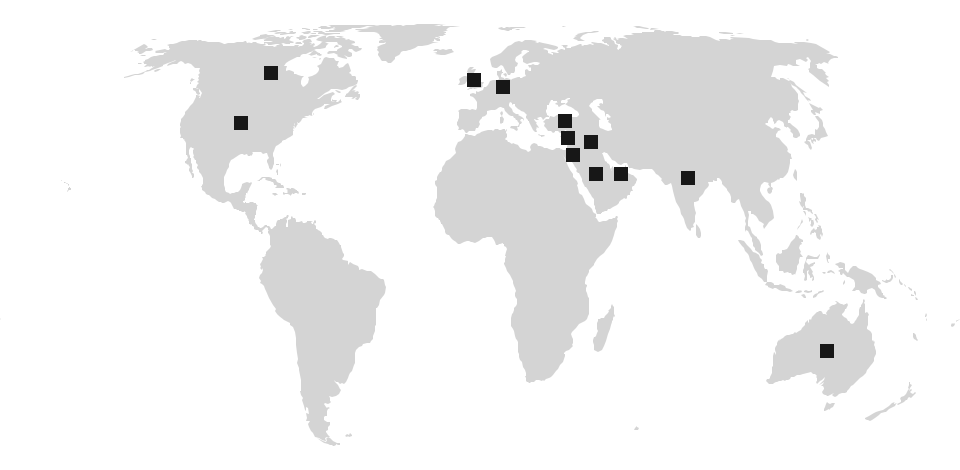
PT Premium Coconut Shisha Charcoal Indonesia manufactures coconut shell charcoal briquettes for shisha — sold as shisha charcoal in the UK, Germany and the Middle East, and as hookah charcoal or hookah coals in the United States and Canada. The company operates a factory in Kawasan Industri Sentul, Bogor, Indonesia, and exports to USA, Canada, UK, Germany, Turkey, Lebanon, Jordan, Saudi Arabia, UAE, Iraq, India and Australia.
Shapes and sizes
Pressed to ±0.3 mm per side. Any size on custom order. Every size: the catalogue; how to choose: shapes and sizes.
-
Cube briquette, macro1600 × 1600 px · 1:1
Cube is the standard shisha format and is specified by edge length in millimetres, with piece count per kilogram following directly from that dimension. Cube
- Sizes
- 22, 25, 26, 27, 28 mm
- Pieces per kg
- 96 · 72 · 64 · 54 · 48 pcs/kg
-
Cube with hole briquette, macro1600 × 1600 px · 1:1
The centre hole changes how a cube lights and how fast it comes up to temperature, which is why it is a separate product rather than a variation on the plain cube. Cube with hole
- Sizes
- 26, 30 mm
- Pieces per kg
- on request
-
Hexagonal briquette, macro1600 × 1600 px · 1:1
The hexagonal section gives a briquette flat faces that sit stable on a grate or in a bowl, which is the practical difference from a round finger of the same dimensions. Hexagonal
- Sizes
- 20×50, 20×35, 21×50, 22×50, 22×35 mm
- Pieces per kg
- on request
-
Stix / finger briquette, macro1600 × 1600 px · 1:1
Stix — the profile most of the market calls finger or stick — are specified by diameter and length together, so two pieces of equal diameter can differ in weight and burn duration purely by their cut length. Stix / finger
- Sizes
- 20×50, 20×35, 21×50, 22×50, 22×35 mm
- Pieces per kg
- on request
-
Octagonal briquette, macro1600 × 1600 px · 1:1
Octagonal briquettes have eight flat faces and are made in the same section and length combinations as our hexagonal and stix profiles. Octagonal
- Sizes
- 20×50, 20×35, 21×50, 22×50, 22×35 mm
- Pieces per kg
- on request
-
Flat / brix briquette, macro1600 × 1600 px · 1:1
Flat or brix pieces are lower in height than they are wide, which is the format used where a wide, shallow heat bed is wanted rather than a tall stack. Flat / brix
- Sizes
- 25×25×15, 25×25×17 mm
- Pieces per kg
- on request
-
Dome briquette, macro1600 × 1600 px · 1:1
The dome format presents a curved upper face and a flat base, so it seats on one plane while exposing more surface to air than a flat-topped piece of the same footprint. Dome
- Sizes
- 20×35 mm
- Pieces per kg
- on request
-
Lotus briquette, macro1600 × 1600 px · 1:1
The lotus is a three-leaf form, and the leaf count is its identifying feature. Lotus (3 leaves)
- Sizes
- 15×25 mm
- Pieces per kg
- 72 pcs/kg
Importers and distributors
You already sell charcoal and need a factory that can repeat a spec container after container. The record below is what you would check on any new supplier; it is published so you can start.
Buyers switching supplier
Something went wrong: a rejected dangerous-goods booking, a batch that did not match its sample, an invoice from a company name you could not find. Those are the failures most of this site is about.
Grades and prices
Wholesale only. The minimum order is 1 × FCL (20 ft or 40 ft) — there is no cart and no quantity sold below a container. Indicative per-tonne prices are published, dated November 2026 and reviewed monthly: wholesale pricing. If you need pallet quantities, a retail pack, or a sample that arrives by air courier, this factory is the wrong supplier, and that is cheaper to know now than after an exchange of emails. Enquiries are quoted per order, which is why the whole site routes to one export desk rather than a checkout.
| Tier | Ash band | Full packaging, USD/t | Bulk, USD/t |
|---|---|---|---|
| Diamond | 1.2–1.6% | 1,900 | 1,820 |
| Platinum | 1.6–1.9% | 1,800 | 1,720 |
| Super Premium | 1.9–2.3% | 1,750 | 1,670 |
| Premium | 2.3–2.5% | 1,700 | 1,620 |
| Regular | 2.5–3.0% | 1,650 | 1,570 |
Indicative prices by commercial tier, USD per tonne, FOB Tanjung Priok.
Our factory typical ash falls within the Diamond band; every tier's ash ceiling is contractual and verified by the batch COA.
Prices valid November 2026 · reviewed monthly
These prices are indicative and dated, not an offer. A binding figure comes on a proforma invoice against your shape, size, packaging and destination.
What each ash band means for the coal, and the factory typical values behind it: specifications.
Burn and ash test
At packing, before a carton is sealed: Ash content, drop test, crack test, density, a burn-behaviour check, an odour check, and a smoke test on a shisha head. The burn and smoke checks are internal pass/fail gates and carry no duration figure.
In-process sampling records weight, ash content, moisture, ash colour. Tests a buyer can run: testing a shipment.
-
Cubes lit on a coil burner1600 × 1600 px · 1:1
Coconut shell charcoal cubes lit on an electric coil burner, as in the burn-behaviour check at our packing stage. -
One lit cube, close up1600 × 1600 px · 1:1
A single lit coconut shell charcoal cube on a wire grate, from the burn-behaviour check at our packing stage. -
Ash after the burn1600 × 1600 px · 1:1
The ash of a burnt-out coconut shell charcoal cube, left at the end of the burn-behaviour check at our packing stage. -
Ash colour, close up1600 × 1600 px · 1:1
Ash left by a coconut shell charcoal briquette; ash colour is one of the values our in-process sampling records.
Private label and packaging
Private-label brand owners. You are putting your own name on the box. Packaging design is offered free with an order, the print surcharge is inside the quoted price, and the minimum is two tonnes per SKU. Private label and OEM
- Formats
- 1 kg inner box · 500 g inner box · 250 g inner box · 10 kg master carton · 20 kg master carton (cube 28)
- Inner box
- 1 kg inner duplex 250 gsm E-flute, varnished, CMYK
- Master carton
- 10 kg master kraft K150/M125K150 B-flute, up to 3 colours
- Minimum
- Minimum 2 t per SKU (≈2,000 inner boxes or 200 masters at 1 kg)
- 2 weeks new · 10 working days existing
Every format: packaging. What branding adds: private-label costs.
-
Inner box fronts, unbranded2000 × 1500 px · 4:3
The front panel of an inner box is the face a private-label design is printed on; an unbranded box leaves it plain. -
Inner box packing2000 × 1500 px · 4:3
Shisha charcoal is packed in small inner boxes inside a master carton, so the unit a retailer sells and the unit a shipper counts are two different things. -
Neutral packaging2000 × 1500 px · 4:3
Neutral packaging lets a buyer apply their own branding after import, and it is the default where the importer, not the factory, owns the retail brand. -
Carton marking station2000 × 1500 px · 4:3
Transport marks on the carton are what tie a physical box to the packing list and the transport document, so marking is a documentation step as much as a packing one.
Inside the factory
Between the shell and the sealed carton, samples are drawn at carbonization, screening, grinding, mixing, extrusion and drying: at random, at least five pieces per 50 kg.
The site, and what you can see on a visit: the factory. Each stage, from shell to carton: the production process.
-
Carbonization stage2400 × 1350 px · 16:9
Coconut shell is carbonized before it is ever pressed: the shell is converted to charcoal, then ground, and only the resulting powder enters the briquette line. -
Extruder press2400 × 1350 px · 16:9
The die at the press determines the shape a briquette will hold — cube, cube with a centre hole, hexagonal, stix, octagonal, flat, dome or lotus — and every downstream size in the range is set here. -
Cutting and sizing2400 × 1350 px · 16:9
Extruded lengths are cut to size after forming, which is how one die produces several catalogue sizes. -
Drying oven racks2400 × 1350 px · 16:9
Freshly extruded briquettes carry water from the binder and must be dried before packing; moisture left in the piece shows up later as weight, as smoke and as breakage. -
Sorting and grading2400 × 1350 px · 16:9
Sorting removes broken and out-of-tolerance pieces before packing, which is what keeps piece count per kilogram consistent between cartons of the same size. -
Production line, wide2400 × 1350 px · 16:9
A briquette plant runs as a sequence — grind, mix, press, dry, cool, sort, pack — and the line layout is what determines throughput rather than any single machine.
The factory record
Where we have no record, the line is missing rather than estimated. That is why you will not find a monthly capacity, a containers-shipped total or a certificate number in this table — we cannot show you a document for any of them. What is here is our legal name, which you can look up in a public register, and values from our own operating records. The registration numbers, the NIB and the NPWP, are published on one page: our registration numbers, and how to verify each one.
- Legal entity
- PT Premium Coconut Shisha Charcoal Indonesia verify at ahu.go.id →
- Address — registered office and factory
- Jl. Olympic Raya No. 9 Blok B7, Kawasan Industri Sentul, Kec. Citeureup, Kabupaten Bogor, Jawa Barat 16810, Indonesia verify at map pin →
The full verification table, and what we do not hold sets out how to check each identifier at source. The same checks, run on any supplier: how to verify a charcoal factory.
The people you're buying from
Agus Setiawan
Production Supervisor
The author of the technical content published here. Content that carries a name is content someone can be asked about, which is the point of putting a name on it.
-
Portrait, factory manager1600 × 1600 px · 1:1
Budi Santoso, Factory Manager & owner. -
Portrait, production supervisor1600 × 1600 px · 1:1
Agus Setiawan, Production Supervisor.
Profiles: Budi Santoso and Agus Setiawan.
Alongside Agus Setiawan at PT Premium Coconut Shisha Charcoal Indonesia: Budi Santoso, Factory Manager & owner; Eko Prasetyo, Quality Control Supervisor; Rudi Kurniawan, Export Manager (repeat-order clients; English, Arabic); Rina Wulandari, Purchasing Manager; Fajar Hidayat, Logistics Coordinator; Andi Saputra, Sales Manager (new clients; English); and Siti Nurhayati, Administration Manager. The rules our figures follow are set out in our experts and editorial standards.
Reach the export desk on WhatsApp +628213924038 or at export@coconutcharcoal.org. One number and one address for the whole company, rather than a directory of personal mobiles.
Before you send a deposit
Check that the account name on any proforma invoice matches the legal entity in the record above, character for character. If an invoice asks you to pay an individual, a differently named company or an account in a third country, stop and ask why — of us or of anyone else. The registry numbers are published on our documents page so that check takes a minute rather than a leap of faith.
How to verify this factory against the Indonesian registersQuality control
A COA is issued for every production batch. Each COA states its own validity. A batch COA accompanies every sample. For every tonne, 10 × 1 kg boxes, drawn at random are kept for 5 years on open shelves in the factory warehouse. Ash and fixed carbon remain stable in open storage; moisture drifts, and any comparison against a retained sample has to say so.
Our factory typical values: ash 1.20–1.58%, fixed carbon 77.03–80.84%, volatile matter 16.61–18.33%, moisture 1.35–3.06%.
-
Moisture balance bench2000 × 1500 px · 4:3
Moisture content is determined gravimetrically: a weighed sample is dried to constant mass and the loss is reported as a percentage of the original weight. -
Ash test setup2000 × 1500 px · 4:3
Ash content is measured by burning a weighed sample to constant mass in a muffle furnace and weighing the inorganic residue that remains. -
Drop test rig2000 × 1500 px · 4:3
A drop test estimates handling durability by dropping pieces from a fixed height onto a hard surface and counting what breaks, and it is only comparable when the height and piece count are stated.
More: quality · the batch COA · production QC · the quality guarantee.
Order terms and shipping
Payments only to the company account, whose name is the legal entity name. Both purchase routes: buying wholesale.
- Port of loading
- Jakarta (Tanjung Priok) primary; Semarang also used
- Minimum order
- 1 × FCL (20 ft or 40 ft)
- Per variant
- Minimum 2 tonnes per shape, size and packaging variant
- Incoterms offered
- EXW Factory, FOB Tanjung Priok and CFR
- Production lead time
- 15 working days (20 ft) · 20 working days (40 ft)
- Deposit
- 50% T/T deposit against the proforma invoice
- Balance
- Balance against the B/L copy
- Dangerous-goods declaration
- UN 1361, Class 4.2, Packing Group III
On EXW terms the buyer carries the dangerous-goods declarant burden — a real obligation on a Class 4.2 cargo, not a formality. Raise it before you agree an incoterm, not after the booking. Which ocean lines accept charcoal.
Shipped as dangerous goods, done right
Coconut shell charcoal is UN 1361, Class 4.2, Packing Group III, and we declare and ship it that way. Since IMDG Amendment 42-24 became mandatory on 1 January 2026, Special Provision 978 governs it — a passed UN N.4 self-heating test no longer takes charcoal out of the Code, so the exemption route that existed before it is closed. We hold the material for its weathering period and check its temperature on the day of packing, which is what SP 978 actually asks of a shipper.
Source: IMDG Code Amendment 42-24, adopted as IMO Resolution MSC.556(108), Special Provision 978. Last verified . General information on charcoal export, not legal or dangerous-goods advice — confirm the requirements for your own shipment with your forwarder or a licensed dangerous-goods specialist before anything moves.
How coconut charcoal ships as UN 1361 dangerous goods →UN 1361 and Amendment 42-24 · the shipping documents.
-
Container stuffing2400 × 1350 px · 16:9
How a container is stuffed decides the arrival condition: stack pattern, restraint and the air left above the cargo all belong to the packing plan, not to the vessel. -
Headspace and dunnage2400 × 1350 px · 16:9
The air space left above a stuffed charcoal load and the restraint holding the stack are both stowage conditions, and they are inspected as part of the loading, not after it. -
Container truck at the bay2400 × 1350 px · 16:9
Loading a container at the factory rather than at a container yard means the cargo is stuffed once, by the people who packed it, and moves as a sealed unit from there.
Where we export to
Each country below links to its import guide.
Start with a sample
Tell us the market you sell into and we will propose a set to test. One thing to know before you ask: a charcoal sample is not a parcel. It moves as declared UN 1361, Class 4.2 dangerous goods, through a forwarder or by sea — the same way a full container moves. The sample terms, and why it cannot come by air courier sets out the whole offer before you open a chat.
- 1 · Sample Free, 1–10 kg. Paid by the recipient. A batch COA accompanies every sample. Dispatched within 2 working days.
- 2 · Proforma invoice 50% T/T deposit against the proforma invoice.
- 3 · Production 15 working days (20 ft) · 20 working days (40 ft).
- 4 · Balance Balance against the B/L copy.
Explore by need
Shipping and dangerous goods
The flagship reference, and the deepest part of this site.
-
Shipping coconut charcoal as UN 1361 dangerous goods
The whole picture: classification, carriers, containers and paperwork.
-
UN 1361 and IMDG Amendment 42-24
What changed on 1 January 2026, and what Special Provision 978 now requires.
-
Which ocean lines accept charcoal
Carrier policies, dangerous-goods surcharges, and rejected bookings.
-
Containers, tonnage and freight for charcoal
Payload by shape, stuffing temperature, incoterms and transit times.
-
The document set a charcoal shipment needs
DG declaration, safety data sheet, weathering certificate, certificate of origin.
-
Regulatory updates for charcoal exporters
Dated changes to the rules that govern this cargo in transit.
The product and its specifications
What the material is, and what a laboratory actually measured in it.
-
The briquettes themselves: shapes, sizes and loading terms
Every shape we press, with palletisation, lead time and the incoterms on offer.
-
The catalogue: every shape and size we press
Every size of every shape, with the pieces-per-kilogram counts we hold — and any other size on custom order.
-
Our factory typical values for coconut shell charcoal
Ash, fixed carbon, volatile matter and moisture as factory typical values — and the three figures we do not publish.
-
How coconut shell charcoal is made, stage by stage
The eight stages from shell to sealed carton, the parameters we publish, and the shift log we do not have.
Importing at your destination
The entry process, and what it takes to clear country by country.
-
Importing coconut charcoal: duty, VAT and conformity by country
The six-step entry sequence, and a country matrix carrying the source and read date on every cell.
Buying from the factory
What a first approach looks like, and who you would be dealing with.
-
Buying coconut charcoal wholesale: our box or yours
The two purchase routes side by side, with the minimums and the price basis.
-
How to verify a charcoal supplier before you wire money
What each check actually costs, what it proves, and which ones are closed to a foreign buyer.
-
Free coconut charcoal samples and how they actually ship
The terms in full, and why a sample cannot travel by air courier.
-
Private label and OEM: launching your own charcoal brand
Two tonnes per SKU, what branding adds, and how long the print actually takes.
-
About the factory: the people, the numbers, the registers
Every identifier, with the register to check each one against.
-
Contact the export desk
WhatsApp or email, direct to the people who answer.
Questions buyers ask first
What is the minimum order quantity?
1 × FCL (20 ft or 40 ft). Within a container you can mix shapes, sizes and packaging formats, so a first order does not have to be a single SKU.
Do you sell grades?
We sell one line in five commercial tiers, and each tier is an ash ceiling written into the contract and evidenced for each shipment by that batch’s COA. What we do not sell is a measured grade: a set of single-sample results describes one product’s variation rather than several products, so it cannot establish measured bands. The tiers and their per-tonne prices are on the pricing page. If your buyer specifies a tier name, ask which ash ceiling defines it and which batch certificate evidences it.
How long does production take?
15 working days (20 ft) · 20 working days (40 ft). That is production time only — it excludes packaging, quality control and vessel booking, so build a buffer into your arrival date.
Can I get a sample before ordering?
Yes, and it is free — you cover the delivery. Because charcoal is UN 1361 Class 4.2 it cannot travel as an ordinary parcel, so samples move as declared dangerous goods or by sea rather than by courier. Plan in weeks, not days.
Can one container hold more than one product?
Yes, and it is usually the sensible first order. The two-tonne minimum is per variant, not per order, so a container can carry several cube sizes, shapes or packaging formats. Spreading a first order across three variants is a smaller bet than committing the whole load to one guess.
What is the minimum order for private label?
1 × FCL (20 ft or 40 ft). Inside that container the minimum is two tonnes per SKU, and a SKU is a shape, a size and a packaging variant — not a logo. Two sizes of the same design are two SKUs, so a container of one design is straightforward and a container of six is arithmetic worth doing before you commission artwork.
Contact the export desk
- Address
- Jl. Olympic Raya No. 9 Blok B7, Kawasan Industri Sentul, Kec. Citeureup, Kabupaten Bogor, Jawa Barat 16810, Indonesia
- Export desk hours
- Monday to Friday, 08:00–17:00 WIB (UTC+7)